Perimeter Security & API Abuse Mitigation
This document outlines the security benchmark and abuse mitigation mechanisms designed to protect the system perimeter against unauthorized API flooding, credential abuse, and unauthenticated request storms.
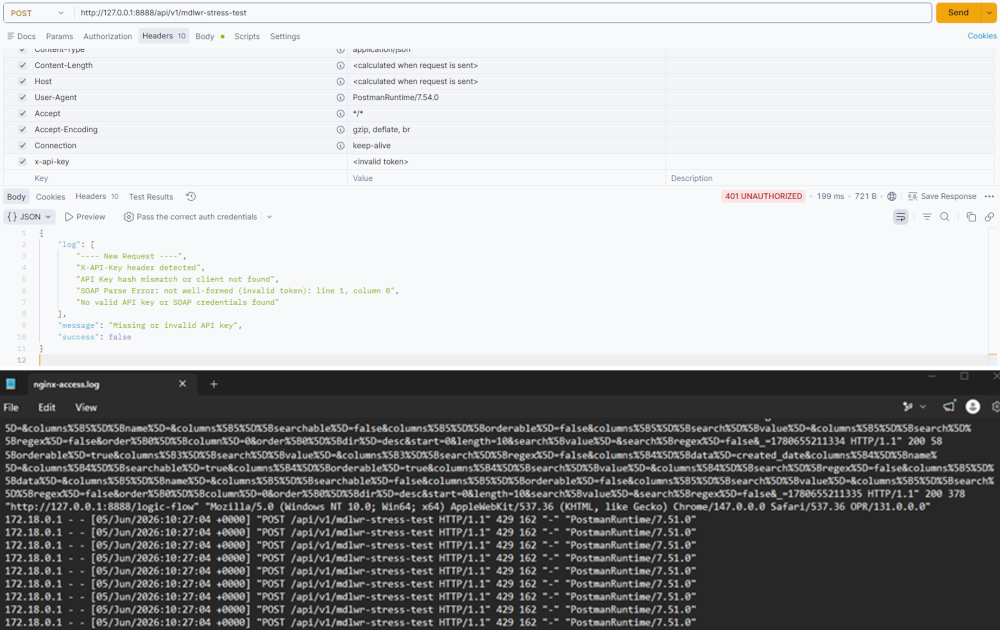
Security Benchmark & Mitigation Overview
The system was subjected to simulated malicious request storms to evaluate edge-layer filtering, downstream isolation, and resource preservation.
1. Perimeter Defense
-
Detection & Interception: Successfully intercepted 100+ Malicious/Unauthenticated RPS (Requests Per Second) instantly at the gateway layer.
-
Layer Enforcement: Handled via Nginx and custom Flask middleware working in tandem at the network edge.
2. Instant Mitigation ("Fail-Fast" Mechanism)
-
Status Responses: Invalid or tokenless requests are rejected immediately before deeper processing occurs.
-
HTTP Standards: Returns precise standard status codes:
-
401 Unauthorized(for missing or invalid tokens/credentials) -
429 Too Many Requests(for request flooding / rate-limiting violations)
-
3. Downstream Isolation
-
Traffic Segmentation: Unauthorized and abusive traffic is dropped completely at the edge.
-
Protected Components: Prevents garbage traffic from reaching sensitive internal layers, including:
-
Redis queues
-
Celery background workers
-
Primary database clusters
-
4. Resource Preservation
-
Overhead Impact: 0% computational overhead on core business logic.
-
System Availability: Ensures internal infrastructure remains 100% available and responsive for legitimate, authenticated users during an active attack or abuse attempt.